
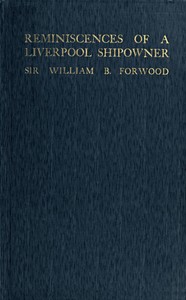
Reminiscences of a Liverpool Shipowner, 1850-1920 by Sir William Bower Forwood
This isn't a novel with a single plot, but the true-life story of a city and an industry, told by one of its chief architects. Reminiscences of a Liverpool Shipowner is Sir William Forwood's personal look back at seventy pivotal years, from 1850 to 1920. He guides us from the era of majestic clipper ships racing for tea to the rise of the hulking steel steamships that shrank the world.
The Story
Forwood starts as a young clerk and climbs to the top of Liverpool's maritime world. He doesn't just give us facts; he gives us scenes. You're right there in the crowded docks, smelling the tar and the sea. You feel the tension of insuring a ship that might not come back, the thrill of launching a new vessel, and the grim reality of navigating financial panics and brutal competition. The real 'story' is the transformation of Liverpool itself—from a bustling port to a global powerhouse—and the technological revolution that made it possible.
Why You Should Read It
What grabbed me was the voice. Forwood is a sharp, witty observer. He’s proud of his achievements but honest about his doubts and the era's hardships. You get the sense of a man deeply connected to his city, watching it evolve at a dizzying speed. It makes history feel immediate. One minute he's discussing a complex merger, the next he's casually mentioning a lunch with the King of Norway. It’s this mix of high finance and human detail that’s utterly compelling. He makes you understand that 'trade' wasn't an abstract concept; it was a daily gamble involving real people, courage, and a lot of luck.
Final Verdict
Perfect for anyone who loves real-life stories of ambition and change more than dry history textbooks. If you're fascinated by the Industrial Revolution, business, maritime history, or just great personal stories from a vanished world, this book is a treasure. It’s for the reader who wants to look beyond the dates and see the sweat, savvy, and spirit that built the modern age. A truly engrossing window into a time when the world was getting much, much smaller.
This publication is available for unrestricted use. It is available for public use and education.
Margaret Jackson
2 months agoExtremely helpful for my current research project.
Kimberly Johnson
4 months agoOne of the most comprehensive guides I've read this year.
David Wilson
2 years agoThe peer-reviewed feel of this content gives me great confidence.





Michael Garcia
10 months agoAfter a thorough walkthrough of the table of contents, it manages to maintain a consistent flow even when discussing difficult topics. A rare gem in a sea of mediocre content.