
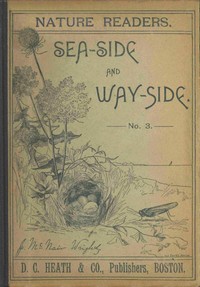
Nature readers : Sea-side and way-side. No. 3 by Julia McNair Wright
Published in 1887 as part of a series of nature readers, Sea-side and Way-side. No. 3 is exactly what it sounds like: a guided tour of the natural world. Julia McNair Wright wrote it for young students, but its appeal is timeless.
The Story
There's no traditional plot. Instead, the book is a series of short, vivid lessons. Wright acts as your guide. One chapter you're examining the intricate engineering of a spider's web by a garden fence (the 'way-side'). The next, you're peering into a tidal pool, learning how a sea anemone eats or why a clam burrows (the 'sea-side'). She describes the life cycles, habits, and homes of insects, shellfish, birds, and common plants with clear, direct language. The 'story' is the daily struggle and wonder of these creatures' lives, framed not as dry facts, but as small, fascinating narratives happening all around us.
Why You Should Read It
I picked this up out of historical curiosity and was completely disarmed. Wright's voice is the book's greatest strength. She writes with a warm, patient authority. You can feel her genuine excitement when she explains how a caterpillar transforms, or her quiet respect for the busy ant colony. It’s science wrapped in wonder. Reading this in the 21st century adds another layer. It’s a reminder of a slower, more analog way of learning—one that required patience, sharp eyes, and a connection to your immediate environment. It made me want to go outside and just look at something, really look at it, for ten minutes. In our world of instant digital answers, that feeling is surprisingly powerful.
Final Verdict
This is a perfect read for parents or teachers looking for a wholesome, engaging way to talk about nature with kids. It's also a lovely, calming slice of history for anyone interested in vintage education, nature writing, or just needing a quiet literary escape. Don't expect thrilling adventure or complex characters. Do expect to be charmed, to learn some surprisingly enduring facts, and to see the world outside your door with a little more magic. Think of it as a gentle, fascinating conversation with a very smart friend from the past.
This masterpiece is free from copyright limitations. Preserving history for future generations.
David Harris
1 year agoFrom the very first page, the atmosphere created is totally immersive. Thanks for sharing this review.
Jennifer Lopez
8 months agoWow.
Lucas Rodriguez
1 year agoThis is one of those stories where the depth of research presented here is truly commendable. Truly inspiring.
Mark Lee
7 months agoThe index links actually work, which is rare!
Christopher Smith
2 months agoImpressive quality for a digital edition.