
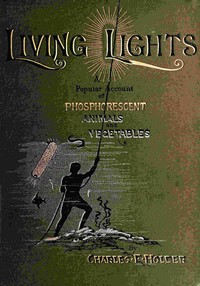
Living lights : A popular account of phosphorescent animals and vegetables
Imagine picking up a natural history book written when gas lamps lit the streets. That's 'Living Lights' by Charles Frederick Holder. First published in 1887, it collects everything scientists of the era knew about bioluminescence—the living light made by creatures and plants.
The Story
There isn't a plot in the traditional sense. Instead, Holder acts as your guide on a global tour of glowing life. He starts with the familiar: fireflies and glow-worms. Then, he pulls you deeper. You'll visit caves adorned with luminous fungi, sail tropical seas sparkling with 'phosphorescent' plankton, and descend into the ocean abyss where bizarre fish use built-in lanterns. Holder describes each organism with palpable excitement, sharing how they produce light and the theories for why. The 'story' is the unfolding mystery of this natural phenomenon, piece by fascinating piece.
Why You Should Read It
What makes this book special isn't just the subject—it's the perspective. Reading it, you feel the genuine awe of a 19th-century naturalist confronting one of nature's great puzzles. The science is sometimes outdated (they thought some light came from electricity or friction!), but that's part of the charm. You're seeing the process of discovery. Holder's writing is clear and full of wonder. You can tell he desperately wants his readers to look at the night and the deep sea with new eyes, to see the hidden lights all around them. It’s a powerful reminder that curiosity is timeless.
Final Verdict
This book is perfect for nature lovers, history of science fans, and anyone who likes a short, mind-expanding read. It’s not a modern textbook; it’s a conversation with a passionate expert from the past. If you enjoy shows like Planet Earth but wonder how people explained these wonders before cameras and submersibles, you'll love this. Find a free digital copy online, pour a cup of tea, and let Charles Frederick Holder show you a world that literally lights itself up.
This publication is available for unrestricted use. Thank you for supporting open literature.
Mary Moore
4 weeks agoA brilliant read that I finished in one sitting.
Logan Miller
1 year agoSurprisingly enough, the plot twists are genuinely surprising. Exactly what I needed.
Ethan Harris
7 months agoSurprisingly enough, it manages to explain difficult concepts in plain English. Highly recommended.
Richard Perez
1 year agoI started reading out of curiosity and the author's voice is distinct and makes complex topics easy to digest. One of the best books I've read this year.
David Gonzalez
1 year agoAs a professional in this niche, the critical analysis of current industry standards is very timely. I feel much more confident in my knowledge after finishing this.