
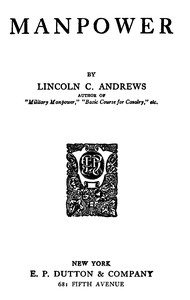
Manpower by Lincoln C. Andrews
Published in 1917, right as America entered World War I, Manpower is Lincoln C. Andrews's manifesto. Andrews, a career military officer, had a front-row seat to what he viewed as a national crisis: a lack of systematic preparation in a dangerous world.
The Story
There isn't a traditional plot with characters. Instead, the "story" is Andrews's urgent case to the American public. He walks you through his vision for a new kind of citizenship. He believed the country needed a structured system—drawing from his military experience—to train young men in discipline, physical fitness, and practical skills. He argues that this isn't just for war, but for building a stronger, more capable nation in peacetime. The book lays out his ideas in detail, from organization charts to training philosophies. It's the blueprint for the system he passionately believed would secure America's future.
Why You Should Read It
This book grabbed me because it’s a raw look into a specific moment of American anxiety. Andrews isn't a detached scholar; he's a true believer. Reading his arguments, you feel the weight of his concern. It’s fascinating to see which of his ideas feel dated (some of his social views definitely are) and which ones echo debates we still have about education, national service, and civic duty. It’s less about agreeing with him and more about understanding a powerful strand of early 20th-century thought. You get a real sense of the man behind the policy.
Final Verdict
Perfect for history buffs who like primary sources that have personality, or for anyone interested in the roots of modern discussions about preparedness and citizenship. It’s not a light novel, but it’s a compelling and surprisingly readable time capsule. If you want to hear a clear, forceful voice from the past explaining exactly what he thought was wrong with America and how to fix it, Manpower delivers.
This historical work is free of copyright protections. Preserving history for future generations.
Kimberly Wright
1 year agoLoved it.



Jessica Sanchez
1 year agoAfter hearing about this author multiple times, it manages to explain difficult concepts in plain English. Don't hesitate to start reading.