
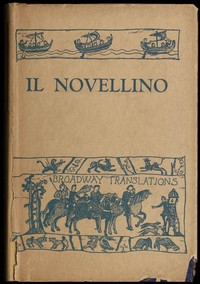
Il Novellino: The hundred old tales by Edward Storer
So, what exactly is Il Novellino? Don't go in expecting a single, continuous story. Think of it as a medieval Twitter feed or a collection of the best anecdotes being passed around in 13th-century Italy. Edward Storer translated these hundred brief tales from their original Old Italian. There's no central plot. Instead, each tale is a self-contained snapshot, rarely longer than a page or two.
The Story
There isn't one story, but a hundred glimpses into a world both familiar and strange. You'll meet Emperor Frederick II testing a man's loyalty with a bizarre request. You'll see a quick-witted lady outsmart a boastful knight with a perfect retort. A philosopher gets trapped by his own riddle, and a king learns a hard lesson about justice from a simple farmer. The characters are archetypes—the wise ruler, the cunning servant, the vain noble—but they feel alive because their dilemmas are timeless. The 'action' is in the dialogue and the sudden, clever twist that ends each tale, often with a moral point or a punchline.
Why You Should Read It
I loved this book for its sheer humanity. It completely shattered my stuffy idea of medieval literature. These aren't grand religious epics; they're street-smart, practical, and often hilarious. You see the roots of so much later literature here—the fable, the joke, the short story. It's incredible to read something so old and still find yourself nodding or chuckling. The themes are immediate: intelligence triumphs over brute force, humility is better than pride, and a sharp tongue can be a powerful weapon. It’s a direct line to the humor and wisdom of everyday people from centuries ago.
Final Verdict
This book is perfect for curious readers who love history but hate dry textbooks. It's a dream for writers or anyone interested in the origins of storytelling. If you enjoy Aesop's Fables, the parables in the Bible, or even modern flash fiction, you'll find an ancestor here. It's also great for busy people—you can read a tale in two minutes and ponder it all day. Just don't expect deep character development or complex plots. Come for the history, stay for the wit. Il Novellino is a charming, insightful reminder that people have always been people, trying to figure life out one short story at a time.
Legal analysis indicates this work is in the public domain. It serves as a testament to our shared literary heritage.
Susan Torres
2 years agoI stumbled upon this title and the character development leaves a lasting impact. This story will stay with me.
Elijah Williams
1 year agoThis is one of those stories where the flow of the text seems very fluid. Definitely a 5-star read.





Mason Wilson
1 year agoTo be perfectly clear, the author's voice is distinct and makes complex topics easy to digest. A true masterpiece.